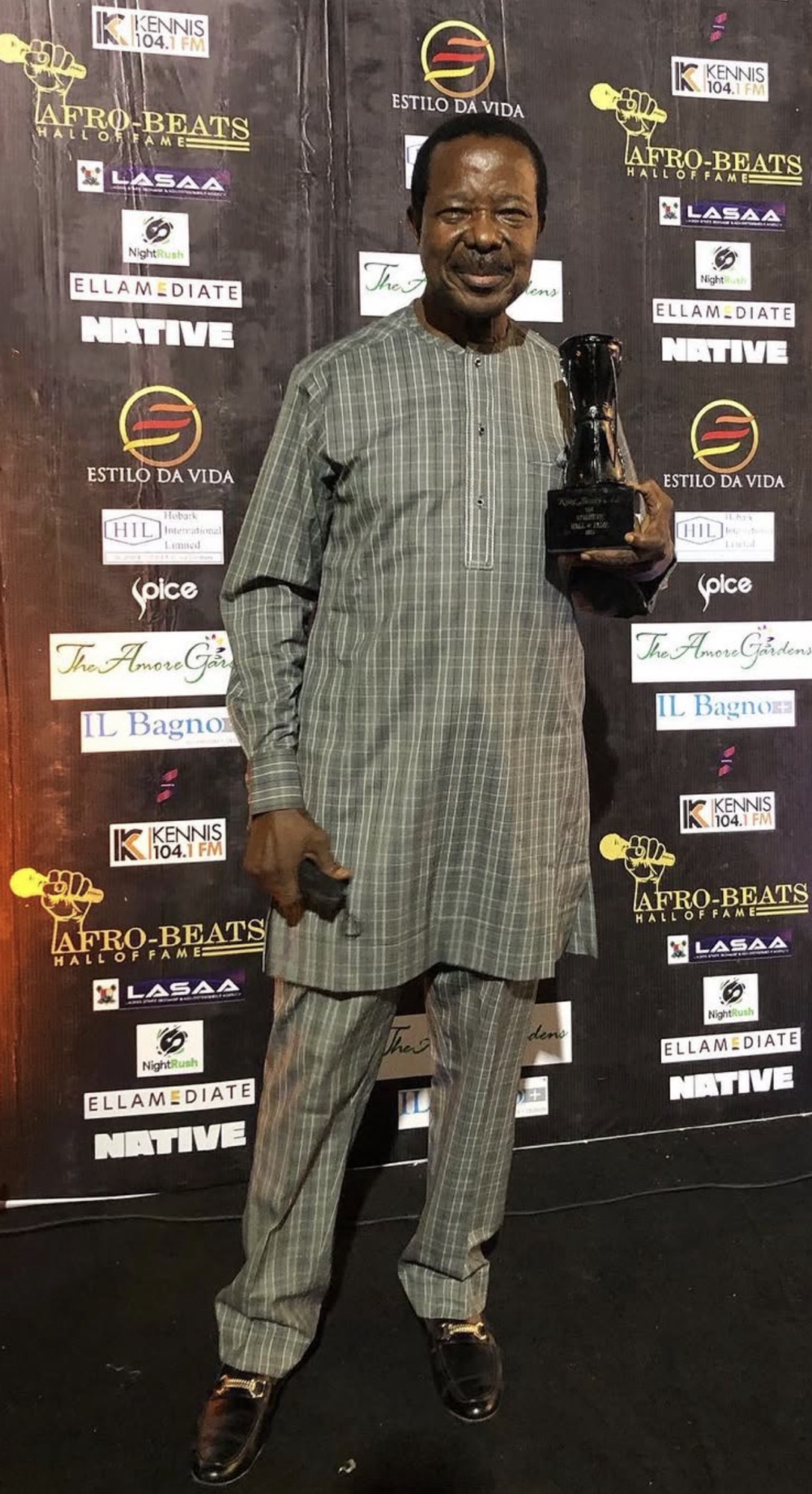
King Sunny Ade
Sunday Adeniyi Adegeye, professionally known as King Sunny Adé, is a legendary Nigerian jùjú singer, songwriter, multi-instrumentalist, and bandleader. He was born on September 22, 1946, in Ondo, Ondo State, Nigeria, into a Yoruba royal family of the Adesida dynasty. Widely regarded as one of Africa’s greatest musicians, he is credited with popularizing jùjú music on the global stage and is recognized as one of the pioneers of world music.
King Sunny Adé began his musical journey in the 1960s with Moses Olaiya’s Federal Rhythm Dandies before forming his own band, The Green Spots, in 1967. The group later evolved into the renowned African Beats, with which he achieved immense commercial success across Nigeria and Africa. His innovative fusion of traditional Yoruba percussion, talking drums, pedal steel guitar, synthesizers, and electric guitars transformed the sound of modern jùjú music and influenced generations of African musicians.
In 1982, King Sunny Adé signed with Island Records, becoming one of the first African artists to achieve widespread international recognition. His critically acclaimed albums Juju Music (1982) and Synchro System (1983) introduced African popular music to global audiences. Synchro System earned him a Grammy Award nomination, making him the first Nigerian artist to receive a Grammy nomination. He later received a second Grammy nomination for his 1998 album Odu, becoming the first African artist to earn multiple Grammy nominations.
Beyond music, King Sunny Adé has contributed significantly to Nigeria’s creative industry through music education, copyright advocacy, and cultural preservation. He served as Chairman of the Musical Copyright Society of Nigeria (MCSN), founded the King Sunny Adé Foundation to support emerging talents, and has served as a visiting lecturer in music. His enduring influence has earned him recognition as one of the most important ambassadors of Nigerian music and culture.